
The forbidden territory
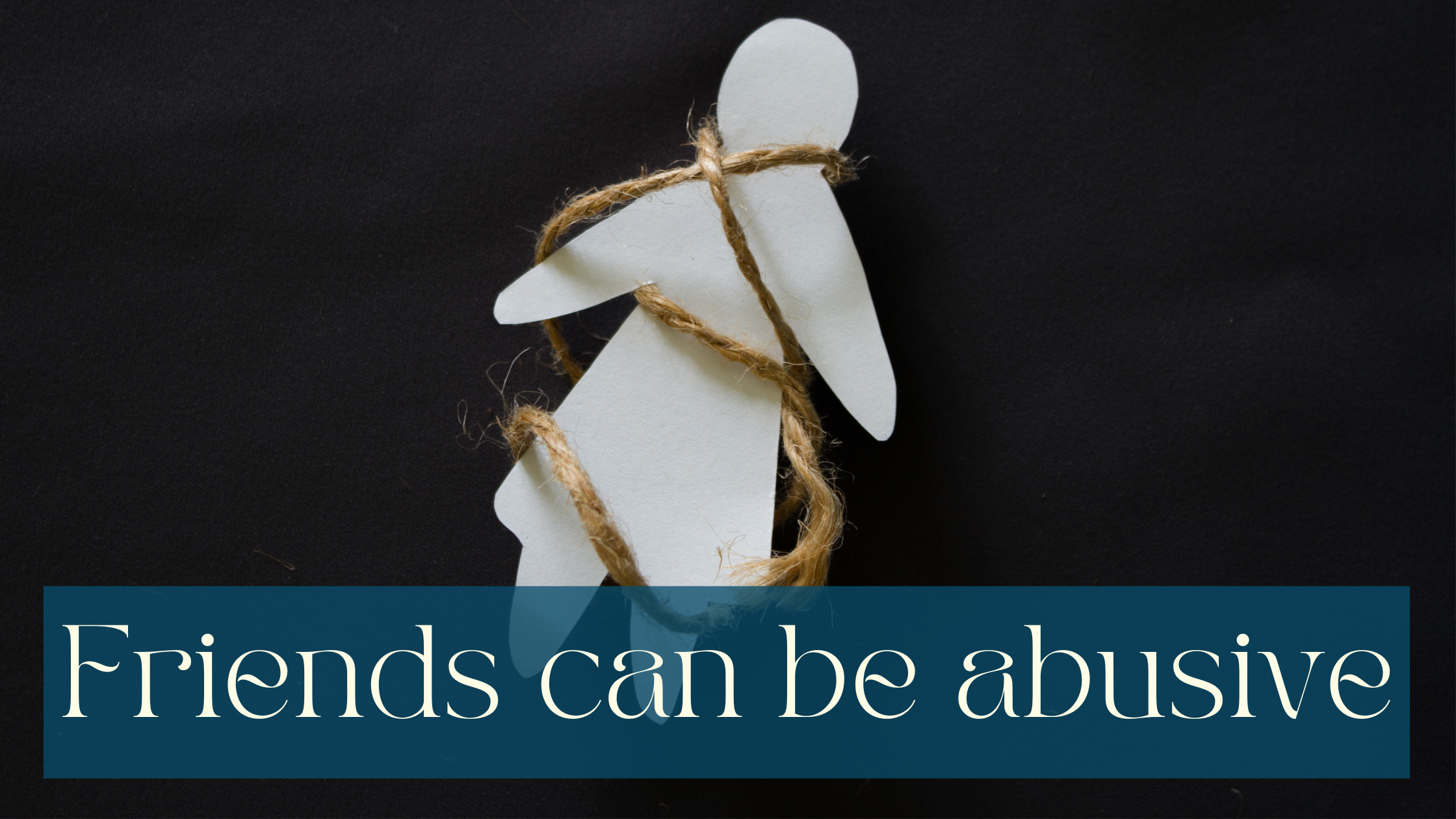
Cue to people leaving. That’s okay. And if this is a topic that may trigger you into oblivion, please don’t proceed. You take good care of yourself. Also disclaimer that I’m still not a therapist or counsellor or whatever other fun name the English language has thought up for the same profession. I’m what they patronisingly call an “expert by experience”. Go figure.
Abusive Behaviour
Let’s talk about abusive behaviour first. Because it may be more subtle than you think. For me it mostly was. It’s not always outright violence, in whichever form. In fact, it is most often smaller behaviours and behavioural patterns that are hard to recognise. Which is why you may encounter these relationship dynamics again and again and… again. Really talking from experience here and getting tired of it. Anyway.
I’ve combed through the internet, so you don’t have to. I’ll also keep it to the behaviours I have encountered, so in many ways this is biased. Keep all of that in mind reading on.
The Signs
In this section, I’ll go and try to sort behaviours into beginning, middle and end. To be fair, most behaviours show in the middle stages, but it felt like a good structure and guide for people to make sense of what you may be experiencing.
In the beginning
Much like in a romantic relationship that ends up being abusive, an abusive friendship can start the same way. Often, it starts with you being in a vulnerable position because you are going through some shit or have just been through it and they swoop in as the saviour. At the same time – and even when they aren’t “saving” you – they will love bomb you. You’re getting all the compliments and gifts. They will tell you how close they already feel to you and how lucky they are they’ve met you. What they will also tell you is how some of their other (or their only last) friendships have ended. It was drmatic and they are now talking about their ex friends badly. That, friends, is a classic red flag.
Sure, there are abusive situations in friendships (duh, that’s why we’re here!). But more often than not, when someone badmouthes others to you, they will most likely do that about you to other people, too. Either immediately or once your friendship has ended; dramatically, of course. Confront them about it and if they get super defensive or tell you how much of a victim role they’ve had, well, it may be time to move on before it gets worse.
Another thing that should make you cautious in the beginning is if you only ever meet where they want and do what they want. If you suggest anything different, they find excuses not to do it and you end up going with what they suggested. I’m not talking about disabilities here, by the way. Don’t twist this. When this happens early on in a friendship, you will not even realise how ingrained it has become when you’re several months or years into it. You will have become used to it, but it will still drain you and leave you exhausted at the end of it. You will have stopped suggesting things to do and places to go and let them make those decisions. Eventually, they may become annoyed by that, talking about how they are always the one needing to come up with things. That will rile you up and you may get into one big argument about it all.
Once you’re hooked
Equally, down the line, they may expect you to help in any and all situations and drop everything for them. Once you’re experiencing some shit, though, and need their help, they are nowhere to be found. Like most of these signs, this is subtle at first, but will become more obvious over time. You will get more and more reluctant to help them.
Another sign more on the subtle side is when you feel completely drained after you’ve hung out with them. You may attribute it to other things – including introversion and neurodivergence – but soon realise this doesn’t happen to the same degree with your other friends. If you still have them, because you won’t be able to meet in groups with this friend and the way they react to your other friendships may make you meet up less with them.
Because this friend will also be jealous of your other friendships and will find fault with those people despite never taking the time to meet them and form an actual opinion. If you are in a group together, they demonstrate how close you are by calling you names “as a joke” and exposing your vulnerabilities. Talking about exposing you, your secrets also won’t be safe with them if they have a partner they tell everything. You may find out about this after having sent several long voice messages and being told what their partner thought of that or how they are sending their sympathy. Trying to set a boundary, they will then tell you that one of their boundaries is to not leave the room for listening to voice messages anymore because their spouse gets sad every time they do that. Just me? Well then.
Being upset and non-repair
That situation may make you angry but do not expect to get an apology that means anything. Now, this is definitely not unique to abusive friendships, but most common when people want to manipulate the situation or the outcome. To get abundantly clear, here is my definition of an apology:
An apology is an acknowledgement of offence or hurt your actions have caused. It is a statement that makes it clear that you are taking responsibility and accountability for your actions. To make it meaningful, you don’t only reassure the person you are apologising to that this won’t happen again, but also tell them how you achieve it. Additionally, you will actually change your behaviour going forward.
To be perfectly clear, this is my personal definition and I think it should be understood universally. The dictionary definitions I have looked up have all included the words “justification” and “excuse” and “explanation”. Whilst I love an explanation and will often provide one if prompted, it is not necessary and often harmful in an apology. And justifications and excuses have no place in apologies whatsoever as they simply perpetuate the harm you have caused. They essentially tell you it will happen again because the person apologising doesn’t see the point of your getting upset. Equally shit apologies are the ones that are along the lines of “I’m sorry my behaviour triggered you” as it doesn’t show any responsibility or accountability taken and puts the “blame” of the situation to the person who has been hurt. It is wild that this is not universally understood in 2026, but here we are.
If you do get an attempt of an apology from an abusive friend, it will sound like, “I’m the worst friend”, “I never do anything right”, “I hate myself” or “I guess I’m shit at doing that.” This creates a situation in which you are then expected to make them feel better, even though they have fucked up. As I’m drawing examples from my life here, too, this even happens when just the smallest mistake has been made and nobody was harmed but they had to be corrected. It is exhausting.
So that’s the non-repair covered. When an abusive friend gets upset with you – most often for no apparent reason – they will give you the silent treatment. You will try to repair and apologise but will be left in the dark until they decide to break the silence and meet you with a tirade of things that you have supposedly done wrong but didn’t know about. It could be something like you haven’t responded to their message on social media or you have said something that indicates that you “don’t know them” and that is somehow offensive. Remember this is supposed to be a close friend, who has your phone number and who clearly chooses what to hold back from you and what to share to control their level of vulnerability with you. That way, they control the whole relationship.
More abusive behaviour
You are many months or several years into this friendship and things really start to dawn on you. But if you’ve never really been exposed to the concept of abusive friendships, you will find excuses upon excuses for their behaviour, so a lot of these things will be hard to spot. And you definitely won’t be able to lable them as harmful if you don’t even have the language for it. Let’s change that, so this either won’t happen to you again or you will be able to leave these friendships behind faster than in the past.
One of the most insiduous abusive behaviours is judging your actions. It may start with unsolicited opinions (ask me why I hate them…) that you write off as their being concerned and end with downright insults. One of my favourite comments when I showed a “friend” my newly acquired coaching certificate was, “WHO certified YOU?!” They then later said that never happened (on one occasion, this may be harmless, but repeatedly this is indeed gaslighting) but would also belittle my choices to get further certifications in spiritual coaching and astrology later; to the point where I felt ashamed telling them. You are adjusting your behaviour, so they don’t get upset even though you are not hurting anyone? Red flag. Get out of there.
Another related scenario is when you want to celebrate a win and they have no reaction to it. If you’re lucky, you’re getting a monotonous “that’s great” or similar. However, when you have something to commiserate on, they go (back) to their role of saviour and will revel in the whole situation. Meanwhile, when they have achieved something, you are expected to show up with the pompoms and immediately. Getting deeper into this, you will also have to agree with everything they say; even when they contradict themselves. One extreme example I can give you is from when I was talking to this “friend” about the fights the couple across the road were having. She said they do that a lot and there are always two people in a relationship, aren’t there… Well, I agreed, sure, there are always two people in a relationhip. And then she added, “unless it’s abusive.” I had to concede that, of course, unless it’s abusive. She nodded at me in a lecturing way and looked very smug. I felt awful.
Ways to control you
Abusive friends will find the subtlest ways to control you. One of these ways is unsolicited advice. Yes, in and of itself it doesn’t have to be abuse and can be offered to help or out of genuine concern. I get it. And yet most often it’s a way to control other people’s behaviour, even if someone isn’t generally abusive or manipulative. My experience with this over more than three decades – and being that arsehole myself for many years – is the reason my strongest boundary is to ask me for consent before you offer advice or opinions to me.
It gets abusive when they start forcing their advice on you. It won’t look forced, but it will definitely feel that way. They get upset when you don’t follow their advice or when you tell them you have indeed already tried it and it didn’t work for you. They will tell you – subtly or bluntly – that you haven’t given it a good enough go then because clearly it worked for them, so it must work for everyone else. One beautiful example from my own life is when I had changed careers after burning out but wasn’t making enough money to support myself yet. Again and again, I would get job ads matching my old career in marketing sent to me on all channels. By them AND their partner. Until my response was a simple “no,” which they were of course offended by. It stopped the incessant involvement in my work choices, so I was good with causing offence. It was also towards the end, which became more and more palpable, so there was nothing to lose.
Another way to control you and to make you feel inferior is to make you the butt of the joke – usually in front of others – and to call you names (supposed nicknames) that hurt your feelings. When you complain and express your hurt, they will tell you to not make a big deal out of it and are often backed by the people around you who bore witness to the whole thing. This will make part of your personality disappear eventually. In the same vein, they will consistently disrespect your boundaries and make you feel weird for having them. Over time, you will become afraid to say anything or indeed to say no.
Making you feel bad about being disappointed when they, yet again, break their promises is yet another way to crush you and push you into a neat box where you never have any needs. When you’re at this point, you’re very easy malleable and easy to manipulate into the person they need you to be.
At the end
Whether you have realised they’re abusive or not, there will come a somewhat natural end to the relationship, in which more abusive behaviours are displayed. It may start with passive aggression that seems almost harmless, despite being incredibly infuriating. My “favourite” example was when I was living with a “friend” when I was homeless. They outlined how long I had stayed and how I no longer contributed much to the household (because I had been told to get out and was busy figuring that out, by the way) and ended the sentence with: “That’s not fair to anyone, is it?!” I had my back to them at the time and to keep the peace I just said, “I guess not…”
What this particular person then also did was call the homelessness team who was on my case and get information out of them. They actually obliged! Which was why I did not tell them my new address once I had figured out a solution. The audacity often knows no bounds at this stage.
Other signs you may be nearing the end are when you’re being left out of group activities and when they no longer tell you about plans they have (in life or more short term). It’s always under the guise of either them not being ready to share yet or them “knowing” you wouldn’t be interested in that activity, so they didn’t even think of asking you. Silly you, really. This is also the stage when the first rumours fester in groups you are both part of. You will be ostracised without knowing why. Because you still think they are your friend and surely wouldn’t do THAT!
Inevitably, there will be a dramatic breakup of the friendship. It will either be a non-sensical argument or as blatant as a threat to throw you out on the street (as it happened to me once). They will make sure it is big and that you will be the one at fault. Once ties are cut and if you still share community, in which they have any power, the smear campaign against you starts.
They will straight up lie about you and what you have done and send people your way to hold you accountable for those actions. They will try and damage your reputation, even more so if you have some sort of online presence that is essential to your livelihood. My most extreme example is when I finally moved out of that hellhole – still being homeless, but this time at least getting my own room as a lodger somewhere – and thought I had found safety, they sent about 4,000 people my way online to harass me. That person was the founder of an interest group online and had positioned themselves as a good person, a saviour and just SO FUCKING KIND. So everyone in that community believed them and went after me.
I couldn’t rest for days on end. The comments and messages were vile, spanned several platforms and just wouldn’t end; no matter how much I blocked people. I think it was day three when I finally called the police, who at first told me to delete my Instagram account… Victim blaming is the best, isn’t it?! But since it was somewhat of an organisation with a website and an email address and I persisted that this won’t stop otherwise, the police were able to help me. They sent them an email making it clear that this is illegal behaviour that will bear consequences and it all stopped suddenly. I have never heard from anyone from that community since.
Now, this is an extreme example, but smear campaigns can be very small yet equally ostracising and traumatising. Keep yourself safe, if this happens to you. Find people you truly trust that you can lean on and who will help you get out of the aftermath of an abusive friendship.
Why nobody talks about this
Now that you’re painfully aware of all the signs of abusive behaviour in friendships and how it presents, the question of why nobody talks about this remains unanswered. I will make an attempt at explaining it all. Reminder that I do not hold any degrees or certifications in psychology and don’t claim that I have all the answers or are 100% right. We can definitely engage in discourse around it all, too. This is based on what I have observed over the past five to six years since coming out of several abusive and manipulative situations back to back before I finally found safety. I have lived alone again since summer 2021, too, which has massively helped processing all of what happened to me and come to the conclusions I have come to in this essay.
Friendships are third tier relationships
The patriarchy and capitalism have convinced us that the most important relationship we’ll ever have is a romantic one. And one that contains procreation, creating a new family above staying in touch with your own (you know, the people you grow up with). I don’t know about you, but in the neurodivergent queer circles (I know, I know, I live in online bubbles, what can I say…), we more often than not have such a thing as “chosen family” and that is a collection of friends – with a varying degree of closeness – who show up for you and whom you show up for. So, for a whole bunch of us, friendships are THE relationships in our lives.
Yet this is not the truth for the majority of people. The majority is brainwashed (don’t deal with what that activates in you in my comment section) and still pursues the ideal of the nuclear family without a village. So thinking outside of those bounds is usually reserved for blood relations (no matter how toxic), but also only during holiday seasons and for birthdays. Obligation over connection. God forbid you have a good relationship with your folks. Friends are only accepted as “mates” for men, usually in the gym or through watching some type of sports together, and as “girlfriends” for women, whose friendships need to be safely contained inside of a coffee shop or the occasional catch up elsewhere, potentially over some sports activity, too. Pilates, anyone? And let’s not talk about the absence of genderqueer folks in this discussion. I guess the good thing is the rules don’t apply here?! You be the judge of that.
The SECOND you have a stronger bond to someone, it is frowned upon. Surely, you shouldn’t even have the time to forge those bonds. Let alone do life together in any meaningful way. Pushing our friendships aside like this has made it VERY difficult to talk about the toxic and abusive ones, whilst simultaneously pathologising those in which we have some mild arguments and disagreements.
You feel ashamed
The amount of women particularly whom I’ve encountered and heard about who feel ashamed they have been abused in their romantic relationships is endless. Somehow we always blame the victims, who are usually women or genderqueer folks. Imagine, then, “admitting” to abuse by a friend and have that friend even be another woman. A kind woman known in their circle, too. Because that is usually who these people are. They have a standing in the community and that makes them untouchable. Which leads to us hiding the abuse and staying in those friendships for longer, because we don’t have a “legitimate” reason to end them.
People may not believe you
The percentage of people who are not believed when they finally open up to someone about being abused must lie somewhere between 90 and 100%. It is abysmal out there. I’ve been one of those people who sought help from someone who works for a charity for abuse survivors and was left on read. Yep. To this day, there has not even been an acknowledgement of my message. I had to seek help elsewhere without putting emphasis on the emotional abuse part.
My story isn’t unique. So giving up and not telling people because you expect them not to believe you is more than understandable. If you are in an abusive situation like this, I still urge you to reach out to someone. Eventually, someone will listen and I am praying it won’t be too late for you.
Your friendships don’t go that deep
Now this one’s strongly tied to the first one; we don’t see friendships as the top tier relationships that they can be. Friendships could be a strong part of our village, but they are less and less so. We keep friends at arm’s length. Sometimes because trauma did that to us and we’re now cautious to open up for the fear of living through yet another abusive friendship. Hard relate, if this is you. It takes a whole lot of practice and building a whole lot of trust to be vulnerable and get close with people again. Other times, it’s just that we’ve forgotten how to do it. We don’t have any practice when it comes to forging and maintaining strong, close friendships. The only thing that could help us through it is, well, going through it. Be curious about your friends, ask follow up questions and let them ask you as well. Open up. Share what’s on your mind and heart. Have a few close friends that you can count on. It is those people that will also show up for you when you need to cut someone else off because you’ve realised they’ve been abusive.
Sooo, what’s next?
Well, that is of course up to you. But I strongly suggest to get into a community (or several) that feels safe (enough) for you. Within those communities, you will find people you REALLY gel with. Those people could become your friends, if you’re willing to put effort and vulnerability into friendships again. Written down, it sounds so simple; and it is but I know that it’s still not easy. Give yourself a whole load of compassion while you’re getting out of your shell.
Going through abuse? Seek help. There are many organisations out there providing support and also help you to cover your tracks (guidance here) should you live with the abuser. Most of them are targeted towards women, but there are others out there, too. A good guide to getting help can be found on the NHS website here: https://www.nhs.uk/live-well/getting-help-for-domestic-violence/. There’s also guidance on there on how to help your friends when they are going through abuse.
You are not alone, I promise. And you deserve to be treated with respect, appreciation and kindness.
Stay magnificent. Stay witchy.
Your Witch Mother
Sources
The examples and signs of abuse in this blog post are straight from my own life, but I have found parallels on all of the below sites. Have a browse if you want to dig deeper into the topic.